


Why Do My Ears Hurt When Scuba Diving? How to Equalize Properly
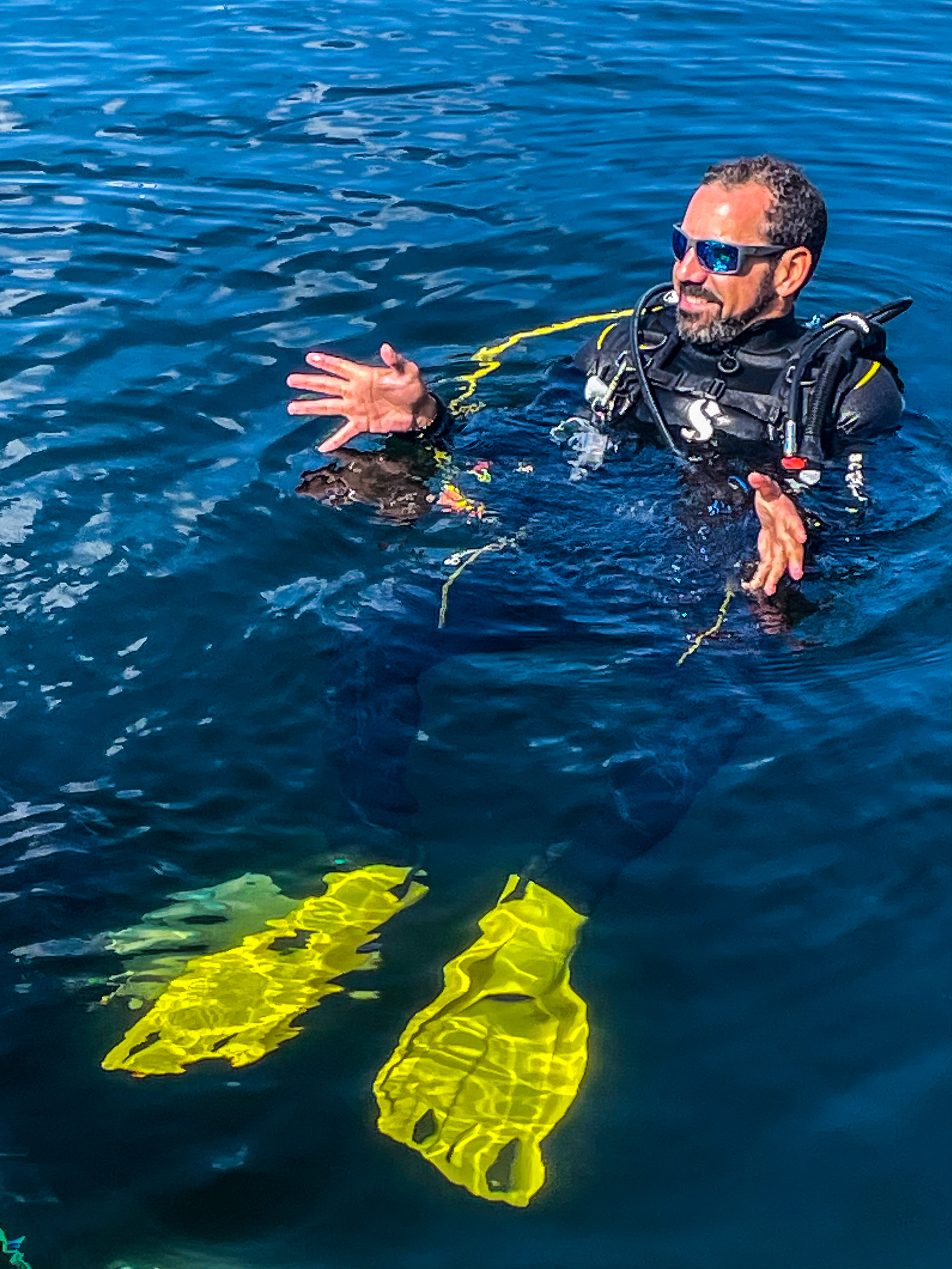
If you've ever started descending on a scuba dive and suddenly felt pressure building in your ears, you're definitely not alone.
For some divers, equalization happens almost without thinking about it. For others, getting those first few feet underwater can be one of the most frustrating parts of the dive. A common reaction is to keep descending and try harder to equalize. That's usually the opposite of what you want to do.
One of the most important things we teach divers about equalization is simple:
Don't wait until your ears hurt.
Good equalization starts before significant pressure develops. Once you understand that, descending can become much more comfortable.
Why Do Your Ears Feel Pressure Underwater?
As you descend, the surrounding water pressure increases. The air space in your middle ear needs to remain balanced with that increasing pressure. Equalization allows air to move through the Eustachian tubes into the middle ear so the pressure on both sides of the eardrum remains balanced. If you continue descending without equalizing, that pressure difference increases. At first, you may simply feel pressure. Continue farther and it can become uncomfortable or painful. Continuing to descend without successfully equalizing can result in middle-ear barotrauma. This is why pain shouldn't be treated as a normal part of descending. It's your body telling you to stop.
Equalize Early and Often
This is probably the most important advice in this entire article.
Don't wait for pressure before you equalize. Start early. Many divers find it helpful to gently equalize at the surface and then continue equalizing frequently during the first part of the descent. The greatest relative pressure changes occur close to the surface, which is one reason those first few feet can cause so much trouble. If you stay ahead of the pressure, equalization generally requires much less effort. If you wait until your ears are already uncomfortable, the increasing pressure difference can make equalization more difficult.
Think of it less like fixing pressure and more like preventing it from developing.
Watch: How to Equalize Your Ears While Scuba Diving
This is something that's much easier to understand when you can actually see the techniques being demonstrated.
In this video, we demonstrate equalization and some of the techniques divers can use to make their descents more comfortable.
The Valsalva Isn't Your Only Option
Most divers first learn to equalize by pinching their nose and gently blowing against it.
This is called the Valsalva maneuver. It works well for many people, but it's not the only way to equalize. Divers can also use techniques involving swallowing, moving the jaw, or using the tongue and throat muscles to help open the Eustachian tubes. Some divers eventually discover that one method works much better for them than another. That's why learning more than one equalization technique can be valuable. The important part, regardless of the technique you're using, is that equalization should be gentle. Trying to force your ears to clear by blowing harder isn't the answer.
What If One Ear Won't Equalize?
This happens frequently. One ear clears immediately. The other one doesn't. The worst thing you can do is continue descending and hope it eventually catches up. Stop your descent. If necessary, ascend slightly until the pressure decreases and try gently equalizing again. Sometimes changing your head or jaw position can help. Some divers also find that tilting the difficult ear upward makes equalization easier. Give yourself time. There is absolutely no reason to race your buddy or the rest of the group toward the bottom.
Equalization Isn't a Race to the Bottom
This is something we emphasize during training. Your buddy may equalize easily. Someone else in the group may descend quickly. That doesn't mean you need to match their descent rate. Every diver is different. If you need additional time to equalize, take it. Use a descent line when one is available. It gives you a visual and physical reference and makes controlling your descent rate much easier. Communicate with your buddy or instructor. Stop. Equalize.
Then continue when you're comfortable. A good dive team isn't waiting for the fastest diver to reach the bottom. They're making sure everyone gets there comfortably.
Your Body Position Can Help.
Some divers find equalization easier when descending in a more upright or feet-first position. This can also make it easier to control your descent because you're able to stop quickly if you begin feeling pressure. Once you've comfortably equalized and moved through the initial portion of the descent, you can transition into your normal diving position.
There's no prize for making the fastest head-down descent. Control matters much more than speed.
What About Congestion?
If you're congested, equalization may become considerably more difficult. Colds, allergies, sinus issues, and other congestion can interfere with normal Eustachian tube function. This is where divers sometimes make another mistake: trying to force the dive because they've already paid for the boat or they're on vacation. If you can't comfortably equalize at the surface, that's important information. Don't ignore it. DAN advises divers not to dive when congested or unable to equalize. If you're uncertain about medications, recurring equalization problems, an ear injury, or whether you're medically fit to dive, that's a conversation to have with an appropriate medical professional rather than something to troubleshoot underwater.
Never Push Through Ear Pain
There's an important difference between noticing a slight change in pressure and experiencing pain. If your ear hurts, stop descending. Ascend slightly if necessary.
Allow the pressure to decrease and try gently equalizing again. If you still can't equalize, the correct decision may be to end the descent. Missing one dive is a much better outcome than turning an equalization problem into an ear injury that keeps you out of the water for the rest of your trip. If you experience symptoms such as persistent pain, vertigo, sudden hearing changes, ringing in the ears, or fluid or blood from the ear, discontinue diving and seek medical evaluation.
Practice Before You Need It
Equalization is one of those scuba skills you can actually practice without being underwater.
Become familiar with how your ears feel when they equalize. Try different techniques.
Pay attention to which movements work best for you. That way, when you're underwater, you're not trying to figure everything out while also managing your buoyancy, watching your buddy, and descending. The technique already feels familiar.
A Better Descent Starts Before You Feel Pressure
Equalization shouldn't be something you do only when your ears start hurting.
It should be part of your descent from the beginning. Start early. Equalize frequently.
Descend slowly. Stay in control. And if something doesn't feel right, stop rather than forcing it.
At Your Dive Concierge, we're big believers that good diving isn't about rushing through skills. It's about understanding what your body and equipment are telling you and responding before a small issue becomes a bigger one. Your descent sets the tone for the entire dive. Take your time getting there. The reef isn't going anywhere.


Comments