


Why Do My Legs Keep Sinking While Scuba Diving?
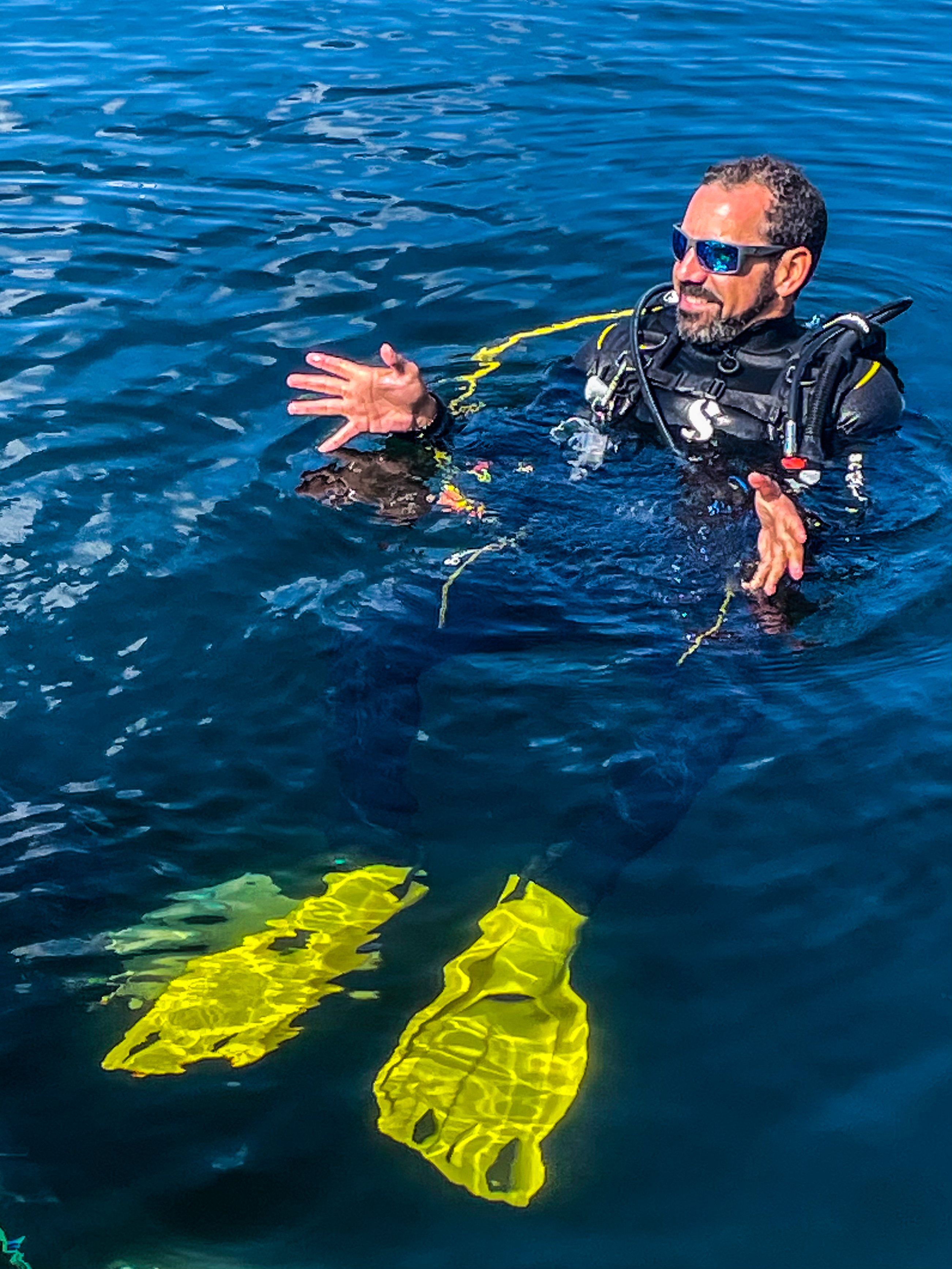
If you've ever felt like your legs are constantly sinking while scuba diving, you're not alone. It's one of the most common challenges new divers face, and it's something we see regularly during training and coaching sessions. Divers often describe it as feeling like they're swimming uphill or constantly kicking just to stay level in the water. The first reaction is usually to blame their weighting.
"I must have too much weight."
While that can sometimes be part of the problem, it's rarely the whole story. More often than not, sinking legs are the result of a combination of body position, equipment setup, buoyancy, and movement. The good news is that small adjustments in these areas can make a dramatic difference.
1. Your Trim Needs a Little Refinement
Trim simply refers to how your body is positioned in the water.
Ideally, your body should be as horizontal as possible. When you're properly trimmed, the water flows smoothly around you, making it easier to move with less effort.
When your legs hang below the rest of your body, they naturally begin to sink. Most divers respond by kicking harder to lift them back up, which only increases effort and air consumption. Instead of trying to fight the water, the goal is to create a position where your body naturally wants to stay level.
2. Your Weight May Be in the Wrong Place
Many divers think the amount of weight they're carrying is the issue. Sometimes it is.
But often it's where that weight is located. If all of your weight is concentrated around your waist, your legs may naturally want to drop. In some cases, moving a small amount of weight higher on your body using trim pockets or adjusting integrated weights can help create a more balanced position. This is one of those adjustments that's difficult to discover on your own but can make an immediate difference once it's dialed in.
3. Your Tank Position Matters More Than You Think
One of the simplest adjustments many divers overlook is the position of their scuba cylinder.
Moving the tank slightly higher or lower in your BCD can change your center of gravity enough to improve your trim significantly. There's no single position that's correct for everyone. It depends on your body shape, exposure protection, and equipment configuration. A few centimeters can completely change how balanced you feel underwater.
4. Look Where You're Going
It may sound surprising, but your head position affects the rest of your body.
Divers who constantly look down at the bottom often allow their shoulders to follow, causing the rest of the body to rotate. Looking ahead in the direction you're traveling usually promotes a more natural, streamlined position. Your body tends to follow your eyes.
5. Your Fin Position Makes a Difference
Another common habit is allowing the knees to bend too much while swimming.
When the lower legs hang beneath the body, they create drag and encourage your feet to sink even farther. A relaxed flutter kick that originates from the hips helps keep your legs in line with the rest of your body. If you haven't already, take a look at our article on How to Flutter Kick Properly for Scuba Diving, where we cover propulsion techniques in greater detail. Also take a look at the YouTube video about it as well - Stop Kicking Wrong!
6. Stop Fighting the Water
Perhaps the biggest mistake divers make is trying to solve sinking legs by kicking harder.
It works—but only temporarily. The harder you kick, the harder your body has to work. That extra effort increases your breathing rate, burns through your air more quickly, and often masks the real problem instead of solving it. The goal isn't to constantly hold yourself in position. The goal is to create a position where your body naturally stays there.
7. Small Adjustments Create Big Improvements
One of the things we enjoy most about coaching divers is watching how quickly these issues can be corrected. Sometimes all it takes is a small adjustment to a tank, a slight shift in weight placement, or a reminder to relax and slow down. Suddenly, a diver who was working hard to stay level is gliding effortlessly through the water. These are often the moments when diving starts to feel easier.
8. It's Rarely Just One Thing
One of the biggest misconceptions in diving is that every problem has a single solution.
Sinking legs are a good example. For one diver, the answer might be adjusting their tank.
For another, it might be refining their flutter kick. Someone else may simply need better buoyancy control or more experience becoming comfortable in the water. The key is understanding that all of these skills work together. Good trim supports better buoyancy.
Better buoyancy improves air consumption. Efficient propulsion helps you stay relaxed.
Each improvement builds on the next.
Becoming More Comfortable Underwater
At Your Dive Concierge, we spend a lot of time helping divers refine these fundamentals because they influence every dive you'll ever make. The goal isn't simply to fix sinking legs. It's to help you become a more balanced, efficient, and confident diver. If you've been struggling to stay horizontal underwater, don't assume you need new equipment or less weight. More often than not, a few small adjustments and a little focused practice are all it takes. The next time you dive, pay attention to how your body is positioned in the water instead of how hard you're kicking. You may discover that diving becomes much easier once you stop fighting the water and start working with it.

Comments